From Fumbling to Flourishing: How Smart Plant Care Brought Us Closer Together
You know that feeling when your favorite houseplant droops no matter how much you water it? I used to kill every green thing I touched—until my friend showed me a smarter way. It wasn’t just about saving plants; it became a shared ritual, a quiet joy we nurtured together. What started as a simple tech fix turned into something deeper: better care, stronger connection, and a home that truly feels alive. I remember standing in my sunlit living room, staring at the sad, curling leaves of my once-lush peace lily, wondering where I’d gone wrong. I’d read the care guides, set reminders, even talked to the plant (yes, really). But still, it wilted. That little plant had become a symbol of my own self-doubt—proof that even the simplest act of nurturing could go awry. Then everything changed, not because I suddenly became an expert, but because I let a small piece of technology help me listen—really listen—to what my plants were trying to tell me.
The Plants We Killed Together
Let’s be honest—most of us didn’t start out as plant whisperers. I certainly wasn’t. My first apartment was filled with hopeful greenery: a spider plant by the window, a pothos trailing from a shelf, a fiddle-leaf fig that looked like it belonged in a magazine. But within months, that magazine-worthy fig was more like a tragedy in slow motion. Brown spots. Drooping stems. One leaf after another giving up. I’d water it too much when I felt guilty, then forget it for days when life got busy. My friend Sarah had the same story. We’d laugh over text: “Another one bites the dust,” or “RIP, my basil plant—you deserved better.” But beneath the jokes was something real: disappointment. We wanted to create calm, beauty, life in our homes. Instead, we felt like we were bringing death to everything with leaves.
And it wasn’t just about the plants. It was about what they represented. A plant is a living thing you choose to care for—not out of obligation, but out of love. It’s supposed to bring peace, not stress. But when they kept dying, it felt personal. Like maybe we weren’t cut out for nurturing, or maybe we were just too distracted, too tired, too busy to do even this small thing right. I remember one evening, Sarah came over with a little succulent in a cute pot. “This one’s supposed to be impossible to kill,” she said, laughing. Six weeks later, it was shriveled and pale. We both stood over it, shaking our heads. “We’re cursed,” she said. But deep down, I think we both knew it wasn’t magic or fate. It was just that we were guessing. And guessing, when it comes to living things, rarely works.
A Simple Gift That Changed Everything
Then, one birthday, Sarah handed me a small box with a mischievous smile. “No plant this time,” she said. “Something better.” Inside was a sleek, simple device—a smart plant sensor. I’ll admit, my first thought was, “Now I need tech to keep a plant alive?” It felt a little silly. Like admitting defeat. But Sarah explained how she’d been using it for months, how it sat right in the soil and told her exactly what her plants needed. No guessing. No drama. Just facts. And the best part? She could check on her mom’s plants from across town using the app. That’s when I stopped rolling my eyes. This wasn’t about laziness or giving up. It was about care—smarter, more connected care.
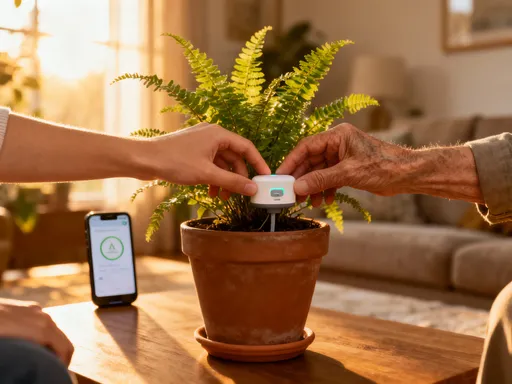
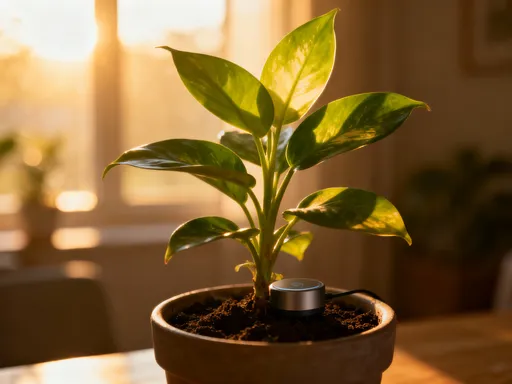
The sensor was surprisingly easy to use. You just stick it into the soil near the roots, download a free app, and pair it via Bluetooth. It measures three things: how much moisture is in the soil, how much light the plant gets each day, and the nutrient levels in the dirt. No wires, no complicated setup. It’s like giving your plant a voice. Suddenly, instead of wondering, “Is this too dry?” or “Is this corner too dark?” I had answers. The app even tells you what kind of plant you have if you’re not sure—just snap a photo. I started with my sad peace lily. The sensor showed me what I’d been getting wrong: I was watering it every five days like clockwork, but the soil wasn’t drying out that fast. I was drowning it. No wonder it looked miserable. That single insight changed everything. I wasn’t a bad plant parent. I was just working with bad information.
From Guesswork to Guidance
Once I started using the sensor, the stress started to lift. No more second-guessing. No more panic when a leaf turned yellow. Now, I got gentle notifications on my phone: “Your peace lily soil is dry—time to water!” or “Low light detected. Consider moving to a brighter spot.” It wasn’t bossy. It was helpful. Like having a quiet, knowledgeable friend whispering advice. And the best part? I could act with confidence. I didn’t have to wonder if I was doing the right thing. I knew.
I remember one Saturday morning, I was about to water my fern—just out of habit, because it had been a few days. But then my phone buzzed. “Soil moisture: optimal. Wait before watering.” I paused. And you know what? I listened. I didn’t water it. Two days later, the app said it was ready. That small moment felt huge. I wasn’t fighting against nature anymore. I was working with it. The plant thrived. New fronds unfurled like tiny green scrolls. And I felt proud—not because I’d magically become a plant expert, but because I’d learned to pay attention. The tech didn’t do the caring for me. It helped me care better.
And it wasn’t just about one plant. I started adding sensors to others—my pothos, my snake plant, even the herbs on my kitchen windowsill. Each one taught me something new. The basil needed more sun than I thought. The snake plant was fine for weeks without water. Every alert, every insight, made me feel more in tune with the life in my home. It turned plant care from a chore into a quiet, daily practice of presence. I wasn’t just keeping plants alive. I was learning to notice. To respond. To nurture.
Growing Closer Through Shared Care
Here’s the part I didn’t expect: the sensor didn’t just change how I cared for plants. It changed how I connected with Sarah. We started sharing access to each other’s plant data through the app. “Hey, your monstera is low on nutrients,” she’d text. Or I’d send her a screenshot: “Your aloe is getting perfect sunlight—look at that happy reading!” What began as a way to keep plants alive turned into a new kind of friendship ritual. We weren’t just checking in about work or kids or weekend plans. We were tending to something together.
One evening, during a video call, I noticed her spider plant looked a little pale. I pulled up the app and saw its light levels had dropped—she’d moved her furniture and didn’t realize the plant was now in a shadow. “Move it six inches to the left,” I said. She did. Within days, it perked up. “You saved it,” she said, grinning. But it wasn’t me. It was us. It was the combination of tech and care, data and love. We weren’t just growing plants. We were growing a shared language of attention. And honestly? It felt beautiful. In a world that often pulls us in different directions, we had found a small, green reason to stay connected.
Even her mom got involved. Sarah set up a sensor in the plant on her mom’s windowsill and gave her access to the app. “Now I don’t have to call and ask, ‘Did you water the plant?’” Sarah said. “She gets the reminder, and I know she’s okay.” It became a tiny thread of care, stretching across miles. The plant wasn’t just alive. It was a bridge.
More Than Just Leaves: What We Were Really Nurturing
As the months passed, I started to notice something unexpected. The more I paid attention to my plants, the more I paid attention to myself. When I learned that plants need rest—darker periods to reset and grow—I realized I did too. I started going to bed earlier. When I saw how a plant thrives with consistent, gentle care rather than dramatic rescues, I thought about my own habits. Was I waiting until I was exhausted to rest? Was I “overwatering” my days with too much busyness, then “forgetting” to refill my energy?
Caring for plants became a mirror. The peace lily taught me patience. The pothos, resilience—it grew toward the light, no matter where it was placed. The aloe, simplicity—thrive with little, give generously. I started journaling next to my plants, sipping tea in the morning light. I’d read the sensor data and then ask myself: “What do I need today?” Moisture? Rest? Light? Connection? The garden became a quiet teacher. And the tech? It wasn’t cold or mechanical. It was the tool that helped me slow down, tune in, and care—not just for my plants, but for my whole self.
I shared this with Sarah, and she laughed. “I thought I was just trying not to kill another spider plant,” she said. “Turns out, I was learning how to breathe better.” That’s the magic of it. The sensor didn’t just save our plants. It helped us remember how to care—for living things, for each other, for ourselves. In a world that often feels too fast, too loud, too much, we found a quiet, green way to come back to what matters.
Easy Steps to Start Your Own Smart Plant Journey
If you’re curious about trying this, I promise—it’s easier than you think. You don’t need to be a tech expert. You don’t need a jungle of plants. Start small. Pick one plant that matters to you—the one on your desk, the herb you cook with, the gift from a loved one that’s barely hanging on. Then, get a smart plant sensor. They’re affordable, widely available, and most come with simple apps that guide you step by step.
Here’s how to begin: First, choose your plant. Make sure the pot has drainage and the soil isn’t waterlogged. Gently insert the sensor into the soil, near the roots but not touching them. Open the app, create an account (it takes two minutes), and pair the sensor via Bluetooth. Then, tell the app what kind of plant it is. If you’re not sure, use the photo ID feature—just snap a picture, and it’ll suggest a match. Set your location so it can track sunlight patterns. That’s it. You’re ready.
Now, let the sensor do its thing. Check the app every few days at first. You’ll start to see patterns—how long the soil stays moist, how much light it gets, when it’s hungry for nutrients. Set up gentle reminders so you don’t forget to check. And here’s my favorite tip: invite someone you care about to share access. It could be a friend, a sibling, a parent. Let them peek in, send a note, celebrate when a new leaf appears. Turn plant care into a shared moment of connection. You don’t have to do this alone. In fact, it’s better when you don’t.
And don’t worry if you make a mistake. Plants are forgiving. So is the process. The goal isn’t perfection. It’s presence. It’s learning. It’s growing—side by side, leaf by leaf, heart by heart.
A Home That Breathes, Together
Today, my home feels different. It’s not because every plant is flawless. Some still have a yellow leaf here and there. But the air feels lighter. The space feels alive. When I walk in, I see green thriving—not because I’m perfect, but because I’m paying attention. And so is Sarah. We still text about our plants. We still laugh about the ones we killed. But now, there’s more life than loss. More connection than confusion.
Smart technology, at its best, doesn’t take over. It doesn’t replace the human touch. It supports it. It gives us the tools to care more deeply, more wisely, more gently. This journey wasn’t about becoming plant experts. It was about becoming better at nurturing—what’s in our pots, and what’s in our hearts. It was about finding a quiet, shared rhythm in a noisy world. It was about learning that care, in any form, is never wasted.
So if you’ve ever stood in front of a drooping plant and felt like you’d failed, I want you to know: you’re not alone. And you don’t have to figure it all out by yourself. Let a little tech help you listen. Let it guide you. And maybe, just maybe, let it bring you closer to someone you care about. Because the most beautiful thing we’ve grown isn’t in a pot. It’s between us. It’s the quiet understanding that we’re all works in progress—learning, reaching for the light, and doing our best to thrive, together.