Tired of family chaos? This simple tool brought us peace and focus
You know that frantic morning rush—kids missing backpacks, partners double-booking, and you shouting, ‘Who was supposed to pick up groceries?’ I lived that chaos too. Then I found a game-changing way to align our family’s rhythm, boost everyone’s focus, and even help the kids learn better—without adding more to my plate. It’s not magic. It’s smart, gentle tech used the right way. Let me show you how one small shift transformed our home into a calmer, more connected space.
The Daily Family Frenzy: When Life Feels Like a Juggling Act
Remember last Tuesday? You woke up late because the dog needed to go out, the coffee machine sputtered and died, and your youngest was already crying because her favorite socks were missing. By 7:45 a.m., you’re trying to pack lunches, answer a work email, and remind your oldest to finish his math homework—all while your partner walks in saying, ‘Wait, I have a dentist appointment today?’ That’s not an off day. That’s just Tuesday for most of us.
I used to think this was normal. That parenting meant living in constant reaction mode—putting out fires, remembering everything for everyone, and feeling like I was failing even when I did it all. The truth is, this kind of chaos isn’t just exhausting. It’s emotionally draining. It wears down patience, steals joy, and makes it harder for all of us to think clearly—especially the kids.
Studies show that unpredictable environments increase stress hormones in children, making it harder for them to focus, regulate emotions, or retain information at school. And for adults? The mental load of tracking every detail—doctor appointments, permission slips, soccer practice changes—can feel like carrying a backpack full of bricks. We’re not just managing tasks. We’re managing anxiety. And the worst part? No one taught us how to stop the cycle. We just keep spinning, hoping one day it’ll get easier.
But what if it didn’t have to be this way? What if we could design our days so they flow better—not perfectly, but with less friction, fewer surprises, and more space to actually enjoy each other? That’s exactly what I started wondering when I hit my breaking point last winter. I was sitting in the car, late for a school pickup, tears in my eyes, because I’d forgotten to sign a field trip form. And I thought: This isn’t about being forgetful. This is about our system failing us. So I decided to try something different.
Discovering Workflow Thinking—Not Just for Offices
Here’s the moment everything changed: I was helping my husband set up a new project at work, and he pulled up this simple digital board with columns—‘To Do,’ ‘In Progress,’ ‘Done.’ He called it a ‘workflow.’ I stared at it and thought: Wait, why don’t we have this at home?
That night, I made a test version for our week. I created columns for meals, chores, appointments, and family time. I added sticky notes for each task. It wasn’t fancy, but suddenly, everything was visible. No more guessing who was handling dinner. No more scrambling when the school calendar updated. For the first time, our week had shape.
Workflow thinking isn’t about turning your home into a corporate office. It’s about bringing gentle structure to the things we do every day. Think of it like setting up guardrails on a winding road—they don’t restrict you. They help you stay on track without constant effort. When routines are predictable, your brain doesn’t have to work so hard to remember or react. That mental space? That’s where calm lives.
I started small. First, I mapped out our weekday mornings. We broke it into steps: wake up, get dressed, breakfast, pack backpacks, brush teeth, out the door. Then we assigned simple visual timers and checkmarks. My daughter, who used to dawdle for 20 minutes in front of her closet, now races to beat the timer. My son, who forgot his homework twice in one week, started using a checklist on his phone. These weren’t punishments. They were tools that made life easier for everyone.
The real win wasn’t just efficiency. It was peace. When systems handle the small stuff, you’re free to be present. I stopped nagging. I stopped yelling. And the kids? They started taking ownership. Because when you show someone how things work, they stop resisting and start participating.
Choosing the Right Tools—Simple, Shared, and Stress-Free
Let’s be honest: not every app is family-friendly. I tried three different tools before finding one that actually worked for us. The first was too complicated—my mom couldn’t figure it out. The second kept crashing. The third? It looked like a spreadsheet from a sci-fi movie. I wanted something simple, something that felt like a natural part of our day, not another chore.
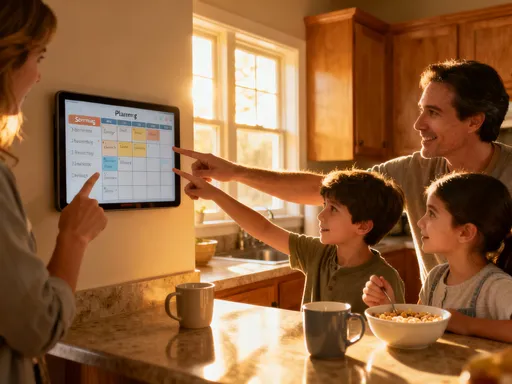
What we landed on was a shared digital calendar with color-coded events and a companion task app. Nothing fancy. But it had everything we needed: real-time updates, gentle reminders, and the ability to add notes and photos. For example, when I plan meals, I attach a photo of the recipe to the calendar. My husband can see it on his phone while grocery shopping. The kids can check what’s for dinner. No more ‘What’s for dinner?’ questions at 5:59 p.m.
Setting it up took one Sunday afternoon. We sat together as a family and added everyone’s recurring events—soccer, piano, dentist, work meetings. Then we color-coded them: blue for school, green for work, yellow for family, red for appointments. Just that small act made a difference. Suddenly, we could see where our time went. We spotted overlaps. We planned ahead.
The key was making it accessible. Everyone has access—yes, even the kids. My daughter updates her homework list. My son marks off chores when he finishes them. And when my mom comes to visit, she checks the calendar to know when we’re free. No more calling to ask, ‘Are you home this afternoon?’ It’s all there.
I also added gentle nudges—like a 10-minute reminder before bedtime routines start, or a weekly alert that says, ‘Don’t forget library books!’ These aren’t alarms. They’re friendly pings that help us stay on track without stress. And the best part? No more nagging. The tech does the reminding, so I can save my voice for storytelling and laughter.
Syncing Schedules, Strengthening Bonds
Every Sunday night, we gather in the living room with snacks and our devices. It’s become our favorite 15 minutes of the week. We call it ‘Family Sync.’ We open the shared calendar and walk through the week together. ‘Okay, who has practice on Wednesday?’ ‘Is Grandma coming on Friday?’ ‘Do we need to pack lunch for the field trip?’
This tiny ritual did more than organize our week. It made us feel like a team. The kids don’t just receive instructions—they participate. They see how their activities affect the whole family. They learn to plan, to anticipate, to support each other. Last week, my son said, ‘Mom, I’ll walk the dog Tuesday because you have your meeting.’ That never would’ve happened before.
Transparency builds trust. When everyone can see the plan, there’s less confusion, less resentment, and fewer last-minute surprises. My husband used to feel like I was always dumping tasks on him. Now, he sees everything in advance. He can say, ‘I’ve got Thursday morning,’ or ‘Can we switch Friday?’ It’s not about control. It’s about collaboration.
And the emotional shift has been real. There’s less tension. Fewer ‘You didn’t tell me!’ moments. Instead, we’re more patient, more connected. We laugh more. Because we’re not scrambling. We’re moving through our days with purpose. The calendar didn’t replace our conversations. It made them better. Now, when we talk about our week, it’s not a list of demands. It’s a chance to listen, to plan, to care.
Even our youngest started recognizing patterns. ‘I have ballet after school on Mondays,’ she’ll say. ‘That means we need to leave early.’ She’s learning time management without us drilling her. It’s happening naturally, because the structure supports her. And that’s the beauty of it—when the environment supports good habits, kids thrive.
Learning Gains: How Structure Fuels Growth
Here’s something I didn’t expect: our kids’ grades improved. Not dramatically, but steadily. My daughter went from forgetting assignments to turning them in on time. My son started managing his study time better. Their teachers noticed. One even asked, ‘Did something change at home?’
The answer is yes. And it’s not because we’re pushing harder. It’s because we’re pushing less. When home life is predictable, kids’ brains aren’t in survival mode. They’re not constantly adapting to chaos. They have space to focus, to learn, to grow.
We started using simple checklists for homework and morning routines. Not as a test, but as a tool. The kids check things off themselves. When my daughter completes her reading log, she adds a little star. When my son finishes his science project, he takes a photo and uploads it to our family app. It’s not about perfection. It’s about progress. And celebrating that progress—‘Look how far you’ve come!’—builds confidence.
Structure also helps with emotional regulation. When a child knows what to expect, they feel safer. They’re less likely to melt down over small changes. We had a rule: if the plan changes, we talk about it calmly and adjust together. So when soccer got canceled due to rain, instead of frustration, my son said, ‘Can we play board games instead?’ That kind of flexibility? That’s emotional maturity in action.
And here’s the thing: we’re not raising robots. We’re raising humans who feel capable. They’re learning responsibility not because we scold them, but because the system supports them. They see the cause and effect: when I pack my backpack tonight, I won’t be late tomorrow. When I finish my homework early, I have time to play. That’s real-life learning—and it sticks.
Calm Homes, Clearer Minds: The Ripple Effect
Peace doesn’t come from a quiet house. It comes from a predictable one. It comes from knowing that someone remembers the dentist appointment. That dinner is planned. That the dog will be walked. That your child’s teacher got the form on time.
Since we started using this system, our home feels different. There’s less yelling. More eye contact. More laughter around the dinner table. I have more energy—not because I’m doing less, but because I’m not constantly switching mental gears. My brain isn’t cluttered with reminders. I can actually listen when my daughter tells me about her day.
My husband says he feels more involved. He’s not just a helper—he’s a partner. He sees the big picture. He knows what’s coming. And when I’m overwhelmed, he can step in without being asked. That’s the power of shared visibility. It doesn’t replace communication. It enhances it.
And the kids? They feel secure. They know their place in the family rhythm. They know their voices matter. They’re not just following orders. They’re co-creating their days. That sense of belonging? That’s priceless.
I won’t pretend it’s perfect. Some weeks, we forget to update the calendar. Sometimes the app glitches. Sometimes life throws a curveball. But now, we recover faster. We adjust. We talk. And we keep going. Because we’re not aiming for flawless execution. We’re aiming for connection. For calm. For growth. And we’re getting there—one small system at a time.
Start Small, Grow Together: Your Turn to Simplify
If you’re feeling overwhelmed, I want you to know: you don’t have to change everything at once. You don’t need a fancy app or a tech degree. You just need one small step. Try this: pick one area of chaos—morning routines, meal planning, after-school activities—and create a simple shared list. Use your phone’s notes app if you want. Share it with your family.
Then, try a 10-minute weekly check-in. Sit together. Look at the week ahead. Ask, ‘What do we need to prepare for?’ Listen. Adjust. Celebrate one win—maybe someone remembered their jacket, or homework got done early. Small victories matter.
And if it doesn’t work the first time? That’s okay. We had weeks where the checklist got ignored. Where the calendar wasn’t updated. Where we fell back into old patterns. But each time, we learned. We tweaked. We tried again. Progress, not perfection.
Technology isn’t here to replace us. It’s here to support us. When used with intention, it can give us back time, energy, and peace. It can help us raise focused, responsible, emotionally aware kids. It can make our homes feel like safe harbors in a busy world.
So take a breath. You’re doing better than you think. And if you’re ready to try something new, start small. Pick one thing. Share it. Sync up. And watch how a little structure can bring big calm. Because you deserve a home that feels light, connected, and full of love—not chaos and noise. And with the right tools, that’s not just possible. It’s within reach.