I Never Thought I’d Make Real Friends on Vacation Like This: How Virtual Reality Brought Me Closer to People Abroad
Traveling used to mean navigating crowded sites alone, smiling politely but feeling disconnected. I’d return home with photos, not memories of meaningful conversations. Then I tried virtual reality on my last trip—a simple app that changed everything. Suddenly, I was sharing laughter with strangers who felt like old friends. It wasn’t magic; it was technology designed for connection. And it made me wonder: what if the key to deeper travel experiences isn’t just seeing new places, but truly meeting new people?
The Lonely Side of Travel No One Talks About
Let’s be honest—no one plans a vacation to feel lonely. We pack our bags, book the flights, dream about sunsets and street markets, expecting joy and connection. But sometimes, the reality is different. I remember standing in front of a famous cathedral, surrounded by hundreds of tourists, yet feeling completely alone. I smiled at people, nodded politely, but no real conversation sparked. That night, I sat in my hotel room scrolling through photos, wondering why I didn’t feel more alive.
I’m not shy, and I’m not antisocial. But traveling solo, especially as a woman in her forties, can feel isolating. Group tours move too fast. Cafés are full, but sitting down with strangers? That takes courage most of us don’t have on day two of jet lag. And while travel influencers post pictures of new friends laughing over wine, the truth is, many of us come home with souvenirs but no stories of real human connection.
That emotional gap—between the travel we imagine and the one we actually experience—can leave us feeling a little hollow. We go to escape routine, to grow, to see the world. But if we’re not truly connecting with people along the way, are we really getting everything we hoped for? I started asking myself: is it possible to meet people in a genuine way when you’re just passing through? I didn’t have an answer—until I tried something completely unexpected.
How Virtual Reality Became My Unexpected Travel Companion
It happened at a small cultural festival in Lisbon. I wasn’t even looking for tech—I was there for the music and the food. But tucked in a quiet corner was a booth labeled “Global Gatherings,” with a few people wearing headsets and smiling. A friendly staff member invited me to try it. “Just five minutes,” she said. “You’ll be dancing with someone in Kyoto.” I laughed. Sure, I thought. Why not?
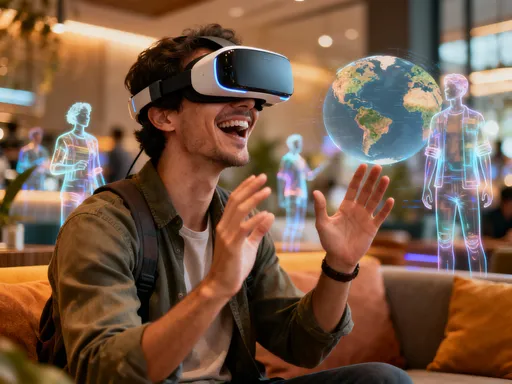
The moment I put on the lightweight headset, my skepticism melted. I wasn’t in a game. I wasn’t fighting robots or flying spaceships. I was standing in a virtual plaza filled with soft light, music playing, and—there she was. A woman with kind eyes and a warm smile, her avatar mirroring her real movements. We didn’t speak the same language, but we waved. Then, a beat dropped, and we started dancing—simple steps, guided by the app. We laughed at our awkward moves. She clapped when I got one right. And in that moment, something shifted. I didn’t feel like a tourist. I felt like a guest at a global party.
What surprised me most was how natural it felt. The technology wasn’t flashy or complicated. It used motion tracking and real-time syncing so our movements matched perfectly, even across continents. The app didn’t rely on words—instead, it used music, shared tasks, and visual cues to build connection. No pressure. No awkward silences. Just presence. I stayed for twenty minutes, but it felt like five. When I took the headset off, my cheeks hurt from smiling. And I wasn’t the only one. The staff told me people often return multiple times, not just for fun—but to see if their “VR friends” are back online.
Making Friends Without Saying a Word: A Shared Experience
That first dance was just the beginning. The next day, I returned—and this time, I joined a cooking session. The theme was “Street Food Around the World,” and we were paired in small groups to prepare virtual dishes from Mexico, Thailand, and Morocco. My team included a man from Sweden, a teenager from South Africa, and a grandmother from Peru. We had no common language, but the app guided us through each step—chopping, stirring, tasting—with fun animations and real-time feedback.
What made it special wasn’t just the activity—it was the shared focus. We weren’t trying to impress each other. We weren’t worried about accents or grammar. We were all just trying not to spill the virtual curry. When the Peruvian grandmother “burned” her empanadas, we all groaned and laughed. When I finally got the salsa recipe right, they cheered. It felt like being on a cooking show with a supportive cast. And because we were fully immersed, our reactions were genuine—no filters, no posing.
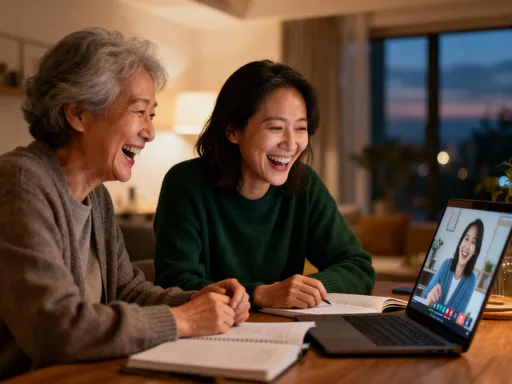
After the session, the app gave us the option to exchange messages. I sent a simple note: “That was so much fun! I hope we meet again.” To my surprise, I got a reply within minutes—first from the teenager, then the others. We started chatting, slowly, using translation tools. We shared real names, photos, even favorite family recipes. The Swedish man sent me a picture of his dog. The grandmother asked if I’d visit Peru someday. These weren’t random internet strangers. These were people I had shared an experience with. And that made all the difference.
By the end of my trip, I had regular VR meetups scheduled with two of them. We didn’t talk every day, but when we did, it felt easy—like catching up with someone you’ve known for years. And last month? I finally met the Peruvian woman in person when I visited Cusco. We recognized each other instantly, hugged like old friends, and spent the day exploring Machu Picchu together. Our friendship didn’t start with words. It started with shared laughter in a digital kitchen. And it grew into something beautifully real.
Why VR Connects Us More Deeply Than Social Media Ever Did
We’ve all tried making friends online. Maybe you’ve joined a travel group on a social platform, commented on a photo, or sent a message that never got a reply. There’s a reason so many of those attempts fizzle out. Social media is great for staying in touch, but it’s not built for real connection. It’s fragmented. Impersonal. You see a curated version of someone, not the whole person.
Virtual reality is different because it creates presence. That’s the word experts use—presence. It means you feel like you’re really there, with someone else, in the same space. Even if you’re using avatars, you see body language. You notice when someone leans in. You hear laughter that’s not canned. You react in real time. It’s not like texting. It’s not like watching a video. It’s like sitting across from someone at a café, sharing a moment.
I remember one evening, during a VR stargazing session, we were all lying on virtual grass, looking up at a shared sky. Someone whispered, “This reminds me of my childhood.” No one had to respond. We just stayed quiet, together. That kind of emotional resonance doesn’t happen over DMs. It happens when you’re present. When you’re sharing space, even if it’s digital.
And here’s the thing: these friendships don’t feel forced. They don’t feel like networking. They feel organic, because the technology gets out of the way. It’s not about likes or followers. It’s about doing something together—cooking, dancing, exploring—and letting the connection grow naturally. In a world where so much communication feels shallow, VR offers something rare: depth without pressure.
Practical Tips: How to Find VR Social Experiences While Traveling
If you’re curious—and I hope you are—finding VR social experiences while traveling is easier than you think. You don’t need to bring your own gear or be tech-savvy. Most opportunities are hosted in public spaces designed for travelers. Start by checking with your hotel. Many mid-range and luxury hotels now offer tech lounges with free VR sessions, especially in cities like Barcelona, Tokyo, and Vancouver.
Festival booths, cultural centers, and tourism kiosks are also great places to look. They often feature short, themed experiences—like “Dance the World,” “Global Kitchen,” or “Virtual Hiking Trails”—that last 10 to 20 minutes and require no prior experience. Just show up, sign in, and let the staff guide you. Most apps are available in multiple languages, and many include beginner-friendly tutorials.
If you’re nervous about joining, you’re not alone. I was too, at first. But here’s what helped me: I reminded myself that everyone else was there for the same reason—to connect. No one is judging your moves. No one cares if you look silly. In fact, that’s part of the fun. And if you’re not ready to jump in alone, go with a friend or family member. Some apps let you join as a pair, so you can experience it together before branching out.
Here are a few simple phrases that helped me feel more confident:
“Hi, I’m new—can I join?”
“I don’t speak much Spanish, but I’d love to try!”
“This is my first time—thanks for being patient!”
Most people respond with warmth and encouragement. And remember: safety is a top priority. Public VR programs are monitored, use secure platforms, and never share personal data without consent. You control what you share and when.
Beyond Fun: How These Friendships Changed My Perspective
The impact of these VR friendships went far beyond my trip. I came home not just with photos, but with a new sense of openness. I found myself more willing to say hello to strangers, more curious about different cultures, less afraid of the unfamiliar. That woman from Peru? She taught me a traditional recipe I now make for my daughter’s birthday every year. The teenager from South Africa sent me a playlist that became the soundtrack to my summer.
These connections didn’t replace real-life relationships. They expanded them. They reminded me that kindness, humor, and warmth are universal. That you don’t need to speak the same language to understand someone’s joy or sorrow. And that friendship can begin in the most unexpected places—even in a digital world.
More than that, these experiences helped me grow. As a mom and a professional, I often feel pulled in ten directions. Travel used to be about escape. Now, it’s about connection. It’s about coming back with more than souvenirs—with new perspectives, new stories, and new people who care about my life, even from afar.
I’ve started encouraging my friends to try it. Some are skeptical. “Isn’t that just gaming?” they ask. I tell them no—it’s more like shared living. It’s laughter without translation. It’s presence without proximity. And it’s one of the most human things I’ve ever done with technology.
The Future of Travel Is Human—Powered by Technology
We often think of technology as something that pulls us away from real life. We blame our phones for distracting us, our screens for isolating us. But what if some technology actually brings us closer? What if the tools we use don’t have to replace human connection—but can deepen it?
Virtual reality, when used with intention, does exactly that. It doesn’t replace travel. It enhances it. It doesn’t take us out of the world—it helps us step more fully into it, with open eyes and an open heart. It reminds us that the most meaningful part of any journey isn’t the place—it’s the people we meet along the way.
The best innovations aren’t the ones that do the most. They’re the ones that help us feel more—more joy, more empathy, more belonging. And that’s exactly what VR gave me: a sense of belonging, even when I was thousands of miles from home.
So if you’re planning your next trip, I want to leave you with this: don’t just pack your suitcase. Pack your curiosity. Be open to the unexpected. Try something that feels a little strange at first. Because sometimes, the most real connections begin in places we never thought to look. And sometimes, the person who feels like an old friend was someone you first met dancing in a virtual plaza, halfway across the world.
Technology didn’t take me away from people. It brought me closer to them. And if that’s not the future of travel, I don’t know what is.