This Is What Dominican Carnival Dreams Are Made Of
Santo Domingo isn’t just the heartbeat of the Dominican Republic—it’s a city that explodes with rhythm, color, and soul during festival season. I walked through streets pulsing with drumbeats, where dancers in feathered costumes moved like fire, and the air smelled of fried plantains and passion. This isn’t just celebration; it’s cultural electricity. If you’ve ever wondered what it feels like to be fully immersed in Caribbean festival culture, this is where the magic begins. The city transforms into a living canvas of sound and motion, where every alleyway hums with anticipation and every face carries the glow of shared joy. This is not performance for tourists—it is life, deeply rooted and vibrantly expressed.
The Pulse of the City: Santo Domingo’s Festival Identity
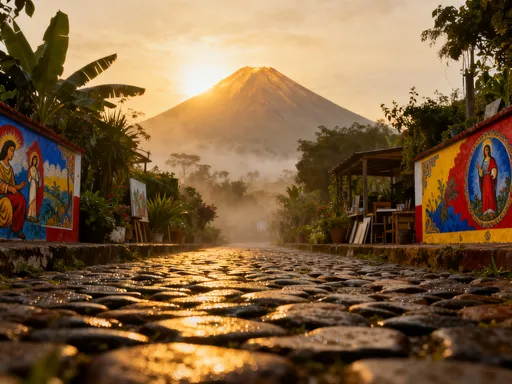
Santo Domingo does not simply host festivals; it breathes them. From the cobblestone streets of the Zona Colonial to the bustling avenues of Naco and Piantini, public celebration is interwoven into the city’s social fabric. These events are not imported attractions or seasonal gimmicks—they are centuries-old traditions passed down through generations, evolving yet deeply faithful to their origins. The arrival of festival season, particularly in the weeks leading up to Carnival, signals a shift in the city’s rhythm. Walls are painted in bright murals, local radio stations increase their rotation of merengue and bachata, and community centers buzz with rehearsals for dance troupes and marching bands.
Festivals in Santo Domingo are more than entertainment—they are acts of cultural affirmation. In a nation shaped by indigenous Taíno roots, African heritage, and Spanish colonial history, public celebrations serve as a unifying force. They allow Dominicans to reclaim identity, express pride, and honor resilience. During Carnival season, this expression reaches its peak. The city becomes a stage where history, satire, and spirituality converge. Children practice traditional dances in schoolyards, elders teach the rhythms of palos drums, and entire neighborhoods collaborate on costume designs that reflect both personal creativity and collective symbolism.
What sets Santo Domingo apart from other Carnival destinations is the authenticity of participation. Unlike commercialized parades seen elsewhere, here the streets belong to the people. There is no VIP section, no ticketed viewing area—only open space where anyone can join, watch, or lead. This inclusivity fosters a sense of ownership among residents and creates a rare intimacy for visitors. As the days count down to the main parade, anticipation builds not through advertising, but through word of mouth, shared meals, and the unmistakable energy that fills the air. It is a season when the ordinary rules of life are suspended, and joy becomes the primary currency.
Carnaval Santo Domingo: Where Tradition Meets Fire
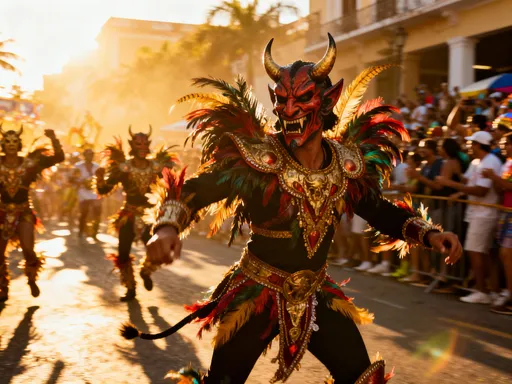
At the heart of the city’s festival calendar is Carnaval Santo Domingo, a vibrant spectacle that blends satire, music, and centuries-old symbolism. Unlike the more famous Carnivals of Rio or Trinidad, Santo Domingo’s version carries a distinct cultural signature—one shaped by local folklore, religious undertones, and a deep sense of community storytelling. The most iconic figures of this celebration are the diablos cojuelos, or “lame devils,” whose striking masks and capes command attention and reverence. These performers, often men from longstanding Carnival groups, wear elaborate horned masks made of wood or papier-mâché, their faces hidden beneath layers of paint and symbolism.
The diablos cojuelos are not merely decorative characters—they represent a spiritual tradition rooted in colonial-era resistance and Catholic syncretism. According to folklore, they symbolize the defeated forces of evil, banished each year during Carnival as a form of symbolic cleansing before Lent. Their limping gait, mimicked with the help of crutches or uneven stilts, is said to reflect the injury of the devil after being cast out of heaven. As they dance through the streets, cracking whips and playfully chasing spectators, they perform a ritual of protection and renewal. Their presence is both fearsome and joyful—a reminder that light triumphs over darkness, and that laughter can be a form of resistance.
The main parade of Carnaval Santo Domingo unfolds along Avenida Duarte, one of the city’s most historic thoroughfares, culminating in the expansive Plaza de la Cultura. This route is more than logistical—it is symbolic, connecting colonial landmarks with modern civic spaces. Along the way, the air pulses with live merengue bands, steel drum ensembles, and the rhythmic pounding of tamboras. Floats adorned with floral arches and political satire roll past, while dance troupes in sequined outfits move in synchronized waves. The energy is electric, not just from the music, but from the sheer density of human connection. Strangers exchange smiles, children ride on parents’ shoulders, and elders wave from balconies, their faces lit with recognition and pride.
Beyond the Main Stage: Hidden Festival Moments
While the grand parade captures headlines, the true soul of Carnaval Santo Domingo lives in the quiet, intimate moments that unfold beyond the spotlight. In neighborhoods like Gazcue, Villa Francisca, and Villa Juana, block parties erupt spontaneously, fueled by homemade speakers, grilled meats, and the steady beat of güiras scraped by hand. These gatherings are not curated for outsiders—they are family-centered, community-driven celebrations where tradition is preserved through participation. It is here that one might witness a grandmother teaching her granddaughter how to tie a mask securely, or a group of teenagers practicing the precise footwork of a traditional dance.
One of the most moving experiences during Carnival season is visiting a local workshop where masks and costumes are crafted. In small storefronts or open-air sheds, artisans spend weeks carving wooden faces, stitching capes from recycled fabric, and painting symbols that carry generational meaning. These creators are not mass producers—they are custodians of culture. Many learned their craft from parents or grandparents, and they view their work as both art and duty. Visitors who take the time to engage respectfully—asking questions, listening, and perhaps even helping with simple tasks—often leave with more than souvenirs; they carry stories.
Another hidden gem is the pre-dawn ritual of sharing mangú, the national breakfast dish made from mashed plantains, sautéed onions, and fried cheese. After a night of dancing and parading, families and friends gather around folding tables set up on sidewalks, passing plates and refilling cups of strong coffee. The air is thick with humidity and laughter, the ground littered with confetti and feathers. In these quiet hours, as the city begins to slow, there is a profound sense of fulfillment. It is not just about surviving the night—it is about honoring it, remembering it, and preparing to do it all again tomorrow.
Music as the Soul of the Celebration
If Carnival has a heartbeat, it is music. In Santo Domingo, rhythm is not an accompaniment to life—it is life itself. During festival season, the soundtrack is dominated by merengue, the country’s national genre, with its fast-paced accordion lines and driving tambora beats. But it is joined by the sensual sway of bachata, the spiritual resonance of Afro-Dominican palos drums, and the improvisational energy of street percussion. These sounds do not play from speakers alone—they are produced live, by hand, by people who have spent years mastering their craft.
Merengue, in particular, is inseparable from Carnival. Its origins lie in rural folk traditions, but in the city, it has evolved into a high-energy expression of national pride. During the parade, live bands set up on flatbed trucks, their music amplified through towering speakers. Dancers move in pairs, their hips swaying in perfect time, while onlookers clap and shout encouragement. The tempo rarely slows, and neither does the crowd. Even those who claim they “don’t dance” find themselves tapping their feet, then swaying, then joining the line.
But music in Santo Domingo’s Carnival is not confined to official performances. In parks like Parque Mirador Sur or along the Malecón, impromptu concerts break out as groups of friends bring instruments and invite passersby to join. A man with a güira might start a rhythm; someone else pulls out a tambor; a teenager begins to sing. Within minutes, a circle forms, and the street becomes a stage. These moments are unscripted, unplanned, and utterly authentic. They reflect a culture where music is not a commodity, but a shared language—one that transcends age, class, and background.
What to Wear, When to Go, and How to Blend In
For travelers hoping to experience Carnaval Santo Domingo, timing is essential. The festival officially runs from late February into early March, culminating on Ash Wednesday. The peak days—usually the weekend before Lent—offer the most vibrant parades and the fullest streets. However, arriving a week earlier allows visitors to witness rehearsals, workshops, and neighborhood celebrations that are often missed by those who come only for the finale. Booking accommodations in advance is strongly recommended, as hotels in the Zona Colonial and nearby districts fill quickly.
When it comes to attire, comfort and color are key. The Dominican climate during Carnival season is warm and humid, so lightweight, breathable clothing is ideal. Many locals wear bright shirts, floral prints, or casual dresses, while some visitors choose to embrace the spirit with face paint or small Carnival accessories. While full costumes are not expected, dressing with intention—choosing bold colors, festive patterns, or even a handmade mask—can deepen the sense of immersion. Comfortable walking shoes are a must, as the festival involves long hours on foot, often on uneven surfaces.
Blending in respectfully means more than how you dress—it’s about how you engage. Dominicans are warm and welcoming, but they value authenticity over performance. Instead of treating the festival as a photo opportunity, take time to learn a few basic Spanish phrases, ask permission before taking photos of performers, and participate when invited. If someone offers you a drink or a bite of food, accepting graciously is often the best way to build connection. Public transportation remains functional during Carnival, though crowded; ride-sharing apps and taxis are reliable alternatives. Staying hydrated, keeping belongings secure, and traveling in groups during late-night events are simple but effective safety practices.
Taste of the Festival: Flavors That Fuel the Dance
No celebration in the Dominican Republic is complete without food, and Carnaval Santo Domingo is no exception. The festival transforms the city into a sprawling open-air kitchen, where the scent of frying oil, smoked meat, and tropical fruit fills every corner. Street vendors set up stands along parade routes and in plazas, offering a rotating menu of beloved Dominican snacks. Among the most popular are empanadas—crispy fried pastries filled with ground beef, cheese, or chicken—and chicharrón, savory chunks of fried pork belly served with lime and onions.
Sweet treats also take center stage. Batata enmielada, or candied sweet potato, is a Carnival favorite, its orange slices glazed in dark honey and sprinkled with cinnamon. Vendors sell them warm, often wrapped in parchment paper, and they are especially cherished during early morning hours when energy needs replenishing. For drinks, fresh coconut water—served in the shell with a straw—is a natural hydrator, while mamajuana, a spiced rum-based concoction aged with tree bark and herbs, offers a bolder flavor for those seeking something stronger. Though its origins are medicinal, it has become a festive staple, shared among friends in small glasses.
What makes festival food special is not just taste, but context. Eating during Carnival is a communal act. Families share platters on sidewalk benches, coworkers pass around empanadas during lunch breaks, and strangers exchange bites at block parties. Food stalls become meeting points, where conversations spark and connections form. Even the act of queuing for a snack becomes part of the experience—a moment to listen to music, watch dancers pass by, or simply enjoy the rhythm of the crowd. In Santo Domingo, nourishment is never just physical; it is emotional, social, and deeply cultural.
Why This Festival Changes How You See Culture
Attending Carnaval Santo Domingo does more than provide entertainment—it reshapes understanding. For many visitors, the experience dissolves the boundary between observer and participant. There is no fourth wall, no separation between performer and audience. When a dancer hands you a maraca, when a vendor offers you a taste of mangú, when a child invites you to dance in the street, you are not a tourist—you are part of the moment. This inclusion is not staged; it is genuine, born from a culture that values presence over performance.
The festival also challenges common assumptions about celebration. In many parts of the world, large-scale events are sanitized, commercialized, or exclusive. But in Santo Domingo, Carnival remains raw, real, and accessible. It does not require a ticket or a costume to belong. It asks only that you come with openness, respect, and a willingness to feel. In doing so, it reveals a truth often overlooked: that joy can be collective, that tradition can be dynamic, and that culture is not something to be viewed behind glass—it is something to be lived.
Ultimately, Carnaval Santo Domingo is more than a festival—it is a living art form, a testament to resilience, creativity, and communal spirit. It invites everyone to witness, to dance, to taste, and to remember. And long after the last drumbeat fades and the confetti is swept away, its rhythm lingers—in memory, in heart, in the quiet certainty that some experiences do not end; they become part of who you are.