You Won’t Believe These Hidden Wild Corners of Copenhagen
When you think of Copenhagen, cozy cafes and colorful Nyhavn boats probably come to mind. But beyond the postcard scenes, there’s a wilder side most tourists miss. I’m talking protected forests, quiet marshlands, and untouched coastlines where nature calls the shots. I was stunned by how close these peaceful escapes are to the city. Just a short bike ride or metro journey from central squares, you can find yourself standing in open meadows with no buildings in sight, listening to skylarks sing over wind-tousled grass. If you’re craving green space over gift shops, let me show you the Copenhagen few ever see—a city that values wildness as much as design, and where nature isn’t an afterthought, but a carefully woven thread in urban life.
The Secret Side of a City Known for Design
Copenhagen is globally celebrated for its sleek architecture, minimalist interiors, and human-centered urban planning. Yet beneath its polished surface lies a deep commitment to preserving wild spaces within and around the city. While many capitals sacrifice nature for development, Copenhagen has taken a different path—one where conservation and accessibility go hand in hand. The city’s green belt strategy ensures that large natural areas remain protected, not just for ecological reasons, but for the well-being of its residents. These spaces are not hidden by accident; they are preserved by policy, community action, and a national respect for the outdoors.
What makes this approach remarkable is how seamlessly these wild corners integrate into daily life. Families bike to forests on weekends, students study beside reed-lined ponds, and office workers take lunch breaks on mossy forest floors. The Danish concept of friluftsliv—open-air living—shapes this culture. It’s not about extreme adventures, but about regular, quiet contact with nature. This philosophy supports the protection of over 70 percent of Copenhagen’s green areas from construction, ensuring they remain accessible and ecologically intact. As a result, residents and visitors alike can experience true wilderness without leaving the urban region.
These spaces also serve vital environmental functions. They filter air and water, support biodiversity, and help regulate temperature in an era of climate change. Wetlands absorb stormwater, forests sequester carbon, and meadows host pollinators essential to food systems. Copenhagen’s integration of nature into city planning isn’t just aesthetic—it’s strategic. By protecting these areas, the city builds resilience while offering its people a sanctuary from the pace of modern life. For the mindful traveler, this hidden layer of Copenhagen offers a richer, more authentic experience than any guided tour could provide.
Amager Fælled: Where City Meets Wild Meadow
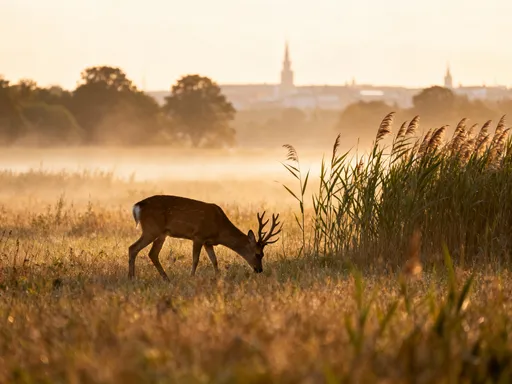
Just southeast of central Copenhagen, separated from the urban sprawl by a thin line of pine trees, lies Amager Fælled—a 230-hectare expanse of protected grassland, heath, and wetland. This is not a manicured park, but a living, breathing ecosystem shaped by wind, rain, and centuries of natural cycles. Designated as a Natura 2000 site under EU conservation law, Amager Fælled is home to rare species like the early spider orchid and the northern wheatear, a migratory bird that nests in its rocky outcrops. It’s also a refuge for roe deer, which graze quietly at dawn and dusk, vanishing into the mist like shadows.
Walking through Amager Fælled feels like stepping into another world. Gravel paths wind through tall grasses that ripple like waves in the breeze. Reed beds line shallow ponds where dragonflies hover and frogs croak in the summer heat. Birdwatchers might spot kestrels hovering overhead or snipe probing the mud with their long beaks. The air carries the scent of wild thyme and damp earth, a quiet contrast to the city’s coffee and traffic fumes. Despite being less than 15 minutes from Christianshavn by bike, the silence here is profound—broken only by the rustle of small animals or the distant call of a curlew.
The preservation of Amager Fælled is a testament to civic engagement. In the early 2000s, plans to build housing on part of the land sparked a wave of public resistance. Residents organized protests, created art installations, and even occupied the site to defend it. Their efforts succeeded, and today the area remains protected under national law. This grassroots victory reflects a broader Danish value: that nature belongs to everyone and should not be sacrificed for short-term gain. When you walk here, you’re not just enjoying a scenic trail—you’re witnessing the power of collective care for the environment.
Jægersborg Dyrehave: A Royal Forest with Modern Soul
Nestled in the northern suburbs of Copenhagen, Jægersborg Dyrehave is a forest that feels both ancient and alive. Once a royal hunting ground for Danish monarchs, this 1,100-hectare woodland is now a public treasure, protected for its ecological and historical significance. It’s part of the UNESCO-listed Par force hunting landscape, recognized for its geometric network of straight avenues laid out in the 17th century for organized deer hunts. Today, those same paths invite cyclists, runners, and strollers to explore beneath a canopy of beech and oak trees that turn golden in autumn.
The forest is home to more than 1,000 free-roaming fallow deer, whose presence adds a touch of wildness to the experience. Seeing a herd move silently through the mist at sunrise is unforgettable—their pale coats glowing in the early light, their steps soft on the leaf-covered ground. The forest floor is carpeted with bluebells in spring and mushrooms in fall, while woodpeckers drum in the distance. Cyclists glide along wide gravel roads, the crunch of wheels on stone mingling with birdsong. There are no cafes or gift shops here, only wooden benches, information boards, and the occasional stone monument marking royal history.
Jægersborg Dyrehave exemplifies how Denmark balances heritage and ecology. The forest is managed to maintain both its historical structure and its biodiversity. Controlled grazing helps prevent overgrowth, while fallen trees are left to decompose naturally, supporting insects and fungi. This approach allows the forest to evolve while honoring its past. For visitors, the experience is deeply calming—a chance to slow down, breathe deeply, and reconnect with natural rhythms. It’s no wonder locals return again and again, finding in its quiet paths a kind of peace that city life rarely offers.
Møns Klint’s Shadow: Stevns Cliff and Its Silent Power
If Møns Klint is Denmark’s famous white cliff, then Stevns Cliff is its quiet cousin—equally dramatic but far less crowded. Located about an hour’s drive south of Copenhagen, this UNESCO Global Geopark stretches along the coast of Stevns Peninsula, where 40-meter-high chalk cliffs rise from the Baltic Sea. What makes this site extraordinary is not just its beauty, but its scientific importance. The cliff face contains a visible layer of dark clay known as the “fish clay,” which marks the boundary between the Cretaceous and Paleogene periods—the moment 66 million years ago when an asteroid impact wiped out the dinosaurs.
Walking the cliff path at Stevns is a meditative experience. The trail runs close to the edge, offering panoramic views of the sea below, where waves crash against limestone boulders. Wildflowers like sea campion and thrift bloom in the thin soil, and larks sing high above. On clear days, you can see the wind turbines of Middelgrunden floating on the horizon. The air smells of salt and warm grass, and the only sounds are the wind and the occasional cry of a herring gull. Unlike Møns Klint, where tour buses line the parking lot, Stevns remains peaceful, drawing mostly locals and thoughtful travelers.
Beyond its natural grandeur, Stevns Cliff carries a human story. Hidden in the forest behind the cliffs is Stevns Fort, a Cold War-era bunker built to withstand nuclear attack. Now open to the public, it offers a sobering glimpse into Denmark’s 20th-century defense strategy. The contrast is striking: one moment you’re contemplating deep geological time, and the next, you’re walking through dimly lit corridors where soldiers once stood guard. This blend of natural and historical depth makes Stevns a place of reflection—a reminder of both Earth’s resilience and human fragility.
Urban Wetlands: The Surprise of Utterslev Mose
In the northwest of Copenhagen, nestled between residential neighborhoods of Brønshøj and Bellahøj, lies Utterslev Mose—a sprawling wetland complex that defies the expectation that cities and nature cannot coexist. Covering over 120 hectares, this area was once drained farmland, but in the 1960s, it was restored to create a natural water retention system. Today, it’s one of the city’s most important green infrastructures, managing stormwater runoff while serving as a haven for birds, insects, and people seeking quiet.
The landscape is a mosaic of shallow lakes, reed beds, meadows, and wooded patches connected by a network of boardwalks and dirt paths. In spring, the air hums with the sound of frogs and bees. Kingfishers dart like blue flashes across the water, and herons stand motionless at the edges, waiting to strike. Families walk dogs, birdwatchers scan the reeds with binoculars, and teenagers sit on benches sharing snacks. Despite its accessibility—reachable by bus or bike from central Copenhagen—Utterslev Mose feels remote, as if the city has been left far behind.
What makes this place remarkable is its dual purpose. It’s not just a park; it’s a functional ecosystem designed to protect the city. During heavy rains, the wetlands absorb excess water, reducing the risk of flooding in nearby areas. Plants filter pollutants, and the soil stores carbon. At the same time, it provides free, open access to nature for all residents, regardless of income or background. This integration of utility and beauty reflects a core Danish value: that nature should serve both the environment and the people. For visitors, Utterslev Mose offers a quiet revelation—that wildness can thrive not in spite of the city, but because of thoughtful planning within it.
How to Visit Responsibly: Rules That Protect the Wild
The continued health of Copenhagen’s natural areas depends on how visitors treat them. Unlike theme parks or commercial attractions, these spaces are fragile ecosystems where small actions can have lasting impacts. That’s why Denmark enforces clear rules to ensure preservation. Visitors are expected to stay on marked paths to avoid trampling rare plants or disturbing animal habitats. Lighting fires is prohibited, as is picking flowers or feeding wildlife. Dogs must be kept on leashes, especially during bird nesting season from March to July, to prevent them from chasing ground-nesting species.
These rules are not arbitrary—they are based on ecological science and years of observation. For example, in Amager Fælled, off-path walking can damage the delicate root systems of orchids that take years to mature. In Jægersborg Dyrehave, feeding deer can lead to overpopulation and disease. At Stevns Cliff, straying too close to the edge can cause erosion and even collapse. The Danish approach is not about restriction, but respect—a belief that nature gives generously, but only if we treat it with care.
Locals generally follow these guidelines without hesitation, viewing them as a social responsibility. Signs are posted in multiple languages, and rangers occasionally patrol to educate visitors. As a traveler, the best way to honor these spaces is to observe quietly, leave no trace, and model respectful behavior for others. Bring a reusable water bottle, pack out all trash, and avoid loud noises. Remember, you’re a guest in a shared home. By following these simple practices, you help ensure that these wild corners remain pristine for future generations.
Why These Places Matter: The Bigger Picture of Urban Nature
The protected natural areas around Copenhagen are more than scenic escapes—they are essential components of a sustainable, livable city. In an age of climate change, urban heat islands, and mental health challenges, access to green space is no longer a luxury, but a necessity. Studies show that regular contact with nature reduces stress, improves concentration, and boosts overall well-being. For children, it fosters curiosity and physical activity; for older adults, it provides gentle exercise and social connection. These benefits are available to all in Copenhagen, thanks to the city’s commitment to equitable access.
Ecologically, these areas serve as vital refuges for biodiversity. In a country where much of the land has been cultivated or developed, urban-adjacent reserves like Amager Fælled and Utterslev Mose act as lifelines for species struggling to survive. They form part of a larger green network that allows animals and plants to move, adapt, and thrive. This connectivity is crucial as temperatures rise and habitats shift. Moreover, these spaces contribute to climate resilience by absorbing carbon, cooling the air, and managing water flow—services that would be extremely costly to replicate with technology.
But perhaps the most profound impact is cultural. These wild corners shape how people see their relationship with nature. They challenge the idea that cities and wilderness are opposites, showing instead that they can coexist in harmony. When a child sees a deer in Jægersborg Dyrehave or a parent watches birds at Utterslev Mose, they internalize a sense of stewardship. They learn that nature is not something distant to be visited occasionally, but a living presence that deserves protection.
For travelers, discovering these hidden corners offers a deeper understanding of Denmark’s values. It reveals a society that measures progress not just by economic growth, but by quality of life, environmental health, and intergenerational responsibility. In a world where cities are expanding rapidly, Copenhagen’s model offers hope—a vision of urban living that includes silence, wildflowers, and the sight of a fox slipping through the trees at dusk.
So the next time you plan a trip to Copenhagen, look beyond the postcard views. Rent a bike, follow the green signs, and let yourself get lost in a meadow or forest. You’ll return not just with photos, but with a renewed sense of balance. Because in these quiet, protected spaces, you don’t just escape the city—you discover a better way to live within it.