You Won’t Believe This Hidden Festival Culture in Noumea
Noumea, New Caledonia, is more than postcard-perfect beaches and French-Café vibes — it’s a city where culture pulses through hidden festivals most travelers never see. I stumbled upon one by chance, and honestly, it changed how I see the Pacific. Away from tourist brochures, locals celebrate with dance, song, and tradition that feel both ancient and alive. This is not performative — it’s real, intimate, and deeply moving. These gatherings are not staged for cameras or curated for visitors. They emerge from the rhythm of community life, rooted in Kanak heritage and shaped by generations of storytelling, resilience, and connection to land and sea. To witness one is to step into a living legacy.
Beyond the Guidebooks: Discovering Noumea’s Secret Cultural Pulse
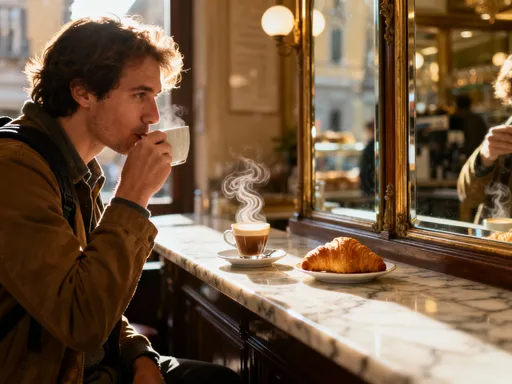
Most travelers picture Noumea as a blend of tropical ease and Gallic charm — strolling along the Anse Vata promenade, sipping espresso at a sidewalk café, or snapping photos at the Tjibaou Cultural Centre. These experiences are beautiful, but they only skim the surface of what this city truly holds. Beneath the polished veneer of tourism lies a quieter, richer current: the unscripted cultural life of its people, particularly within the Kanak communities who have inhabited New Caledonia for over 3,000 years. Their traditions are not confined to museums or weekend performances; they live in the backyards, village squares, and community halls where hidden festivals quietly unfold.
These events are rarely advertised. You won’t find them on event calendars or highlighted in glossy brochures. Instead, they are shared through word of mouth, family networks, and local trust. They mark important moments — seasonal harvests, ancestral remembrance, rites of passage such as coming-of-age ceremonies, or the honoring of elders. Unlike large public festivals designed to attract visitors, these gatherings prioritize authenticity over spectacle. There are no timed entry tickets, no VIP seating, no souvenir stalls. What you find instead is presence: people gathered not to perform, but to belong.
The intimacy of these festivals is what makes them so powerful. They are not meant to entertain but to sustain. In a world where many traditional cultures struggle to maintain visibility, Noumea’s hidden celebrations represent a quiet act of resistance — a refusal to let heritage fade into background noise. For the traveler fortunate enough to witness one, the experience is not about taking something away, but about being allowed to see something real. It is a reminder that some of the most meaningful moments in travel happen not when you plan them, but when you are quietly invited in.
The Spirit of the Festivals: Where Tradition Meets Daily Life
Festival culture in Noumea is not separate from daily life; it is woven into its fabric. These events are not performances staged for an audience, but living expressions of identity, continuity, and community. At their heart are the traditions of the Kanak people, the Indigenous inhabitants of New Caledonia, whose cultural practices have endured colonization, modernization, and globalization. The festivals serve as both celebration and transmission — a way to honor the past while ensuring it lives on in the present.
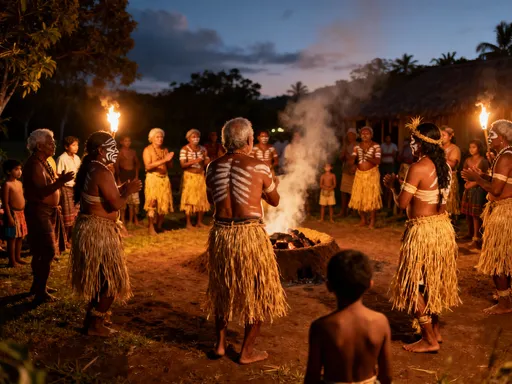
Central to many gatherings is the gaga, a traditional Kanak dance performed in unison by men or women, often in circular formations. Accompanied by rhythmic drumming on wooden slit drums and deep, resonant chanting, the gaga tells stories of creation, navigation across the Pacific, ancestral journeys, and the bonds of kinship. Each movement has meaning — a stomp may represent grounding, a raised arm may signal connection to the sky, a synchronized turn may symbolize unity. The dances are not rehearsed for perfection, but practiced with intention, passed down from elders to youth through repetition and presence.
Attire during these festivals is equally symbolic. Women often wear nassi skirts, intricately woven from natural fibers such as banana leaves or pandanus. These garments are not costumes; they are handmade, often by the wearer or a family member, and represent both cultural pride and connection to the environment. Men may paint their bodies with natural pigments in geometric patterns, linking their physical form to ancestral identity. These visual elements are not decorative; they are declarations of belonging.
The festival experience extends beyond dance and dress. Families arrive days in advance, preparing food in earth ovens known locally as bouches-calèches. Root vegetables, fish, and pork are wrapped in banana leaves and slow-cooked over hot stones, filling the air with rich, smoky aromas. Meals are shared communally, reinforcing bonds and reciprocity. Oral histories are told in the evenings, with elders recounting genealogies, legends, and traditional laws (coutume). For children, these gatherings are informal classrooms; for adults, they are reunions; for the community as a whole, they are affirmations of who they are and where they come from.
How to Find These Hidden Celebrations (Without Intruding)
One of the most important truths about Noumea’s hidden festivals is this: they are not attractions. They are private, community-centered events rooted in cultural significance, not tourism. As such, the question is not only how to find them, but how to approach them with the respect they deserve. The most respectful way to experience one is through a genuine local connection — a homestay host, a community guide, or a cultural liaison at a local center such as the Jean-Marie Tjibaou Cultural Centre, which sometimes facilitates authentic encounters with Kanak traditions.
Some festivals coincide with broader regional events or religious holidays, particularly those that reflect the blending of Melanesian and Catholic traditions. For example, All Saints’ Day in November is sometimes observed with both church services and community gatherings that include traditional elements. The period from late August to October, following the harvest season, is another time when communities often come together to give thanks and celebrate. While these dates can increase your chances of encountering cultural events, there is no guarantee — and that uncertainty is part of the experience.
It is critical to avoid showing up uninvited. These are not public festivals with open gates. Arriving without permission can be seen as disrespectful, even intrusive. Instead, express interest politely through trusted intermediaries. If you are staying with a local family or participating in a guided cultural tour, ask your host whether there are any gatherings happening and if attendance is appropriate. When invited, approach with humility. Observe quietly. Participate only when explicitly encouraged. These are not performances for your entertainment; they are moments of cultural significance for the people involved.
Photography is another sensitive issue. Always ask for permission before taking photos or videos. In many Kanak communities, images are not taken lightly — they are believed to carry spiritual weight. Some elders may decline to be photographed, and their wishes must be honored without question. If you are allowed to take pictures, do so discreetly and with gratitude. The goal is not to capture content for social media, but to carry the memory with reverence.
Why These Festivals Matter in a Modern World
In an age of rapid globalization, digital saturation, and cultural homogenization, Noumea’s hidden festivals are more than tradition — they are acts of resilience. For the Kanak people, these gatherings are vital tools for cultural preservation. Language, dance, storytelling, and customary law (coutume) are not abstract concepts; they are living practices that require active participation to survive. When youth learn the gaga, when elders pass down oral histories, when families prepare food in traditional ways, they are not reenacting the past — they are keeping it alive.
For younger generations, these festivals offer a powerful sense of identity. In schools and cities, Kanak youth often navigate between two worlds — the modern, French-influenced system and the cultural expectations of their families. Participating in a festival allows them to reconnect with their roots, to see pride in their heritage, and to understand their responsibilities to family, community, and land. It is not about rejecting modernity, but about grounding it in something deeper.
Elders view these gatherings as essential links to ancestral knowledge. They speak of the land (terre) not as property, but as a relative. They teach that coutume — traditional law and custom — governs relationships, conflict resolution, and stewardship of natural resources. These values are reinforced during festivals, where respect, reciprocity, and collective well-being are lived, not just spoken. In this way, the festivals are not nostalgic; they are functional, shaping how communities operate today.
And while these traditions remain deeply rooted, they are not static. Modern instruments sometimes blend with traditional ones. Youth bring new energy, new interpretations, and new ways of expressing cultural pride. Some festivals now include elements of contemporary music or digital storytelling, showing that tradition can evolve without losing its essence. The core values — respect, connection, continuity — remain unchanged. This balance between preservation and adaptation is what makes these festivals so meaningful, not just for Kanak people, but for anyone who values cultural diversity.
What to Pack and Prepare: A Practical Guide for Sensible Travelers
For travelers hoping to engage respectfully with Noumea’s cultural life, preparation goes beyond sunscreen and swimwear. If you are invited to a festival, your presence should reflect thoughtfulness and care. Start with clothing: modest attire is essential. Opt for lightweight, breathable fabrics that cover shoulders and knees. Avoid flashy or revealing clothing, which may be seen as disrespectful in a cultural or ceremonial context. Sandals or soft shoes are ideal, as many gatherings take place on grass or bare earth.
Bringing a small gift is a thoughtful gesture, especially if you are attending as a guest. Consider local snacks, school supplies, or useful household items that can be shared with the community. Cash is also practical — some events include a collection for community needs, or you may be invited to contribute to a shared meal. Avoid giving money directly to individuals unless it is part of a customary exchange, and always follow the lead of your host.
Learning a few basic phrases in Drehu, one of the Kanak languages, or in French, the most widely spoken language in Noumea, shows respect and openness. Simple greetings like “Bonjour” (hello), “Merci” (thank you), or “Wan sosel!” (thank you in Drehu) can go a long way in building rapport. Even if your pronunciation is imperfect, the effort is appreciated and often met with warmth.
Be prepared for flexibility. Schedules in community gatherings are often fluid. Events may start later than expected, change location, or evolve in ways that are unpredictable. Patience is more important than punctuality. Instead of treating the festival as a timed attraction, approach it as an experience to be lived. Bring water, a light wrap for shade, and an open mind. Most importantly, come ready to listen more than you speak, to observe more than you act. Your role is not to lead, but to be present.
Balancing Tourism and Tradition: The Delicate Line
As Noumea becomes more visible on the global travel map, a delicate tension is emerging: how to share culture without exploiting it. Some Kanak communities are beginning to open certain events to visitors, not for profit, but to foster understanding and appreciation. These invitations are not marketing strategies; they are acts of generosity and trust. They reflect a desire to be seen, but on their own terms.
Responsible tourism means recognizing that not everything is meant for outsiders to witness. There are ceremonies, songs, and rituals that are sacred, private, or restricted by coutume. These must be respected without question. The goal is not to turn tradition into entertainment, but to build bridges of mutual respect. When visitors approach with humility, listen deeply, and follow community guidance, they contribute to a positive exchange.
Supporting the local economy in ethical ways is another way to honor tradition. Choose accommodations that are locally owned or eco-friendly. Purchase crafts directly from artisans at markets or cultural centers, ensuring that your money supports the creators. Opt for guided tours led by Kanak community members, where storytelling is shared with consent and context. These choices help ensure that tourism benefits the people whose culture is being shared, rather than diluting it for mass appeal.
The future of these festivals depends on balance. Too much exposure can lead to commodification; too much isolation can limit resources for preservation. The ideal path lies in collaboration — where communities retain control, visitors act with respect, and cultural exchange happens with integrity. Travelers have a role to play in this balance: not as spectators, but as stewards of understanding.
Leaving With More Than Memories: A Traveler’s Reflection
Witnessing a hidden festival in Noumea changed the way I think about travel. It wasn’t the most colorful, the loudest, or the most photographed moment of my journey. But it was the most profound. There was no stage, no spotlight, no encore. Just people gathered in a clearing, dancing under the trees, their voices rising with the wind, their feet moving in time with generations before them. I stood at the edge, silent, grateful, humbled.
I left with more than memories. I left with a deeper understanding of what culture truly means — not as a performance, but as a practice. Not as something to be consumed, but to be respected. These festivals are not relics of the past; they are living acts of identity, resilience, and love. They remind us that in a world that often feels fast and fragmented, there are still places where community, tradition, and connection endure.
Travel like this is not about checking destinations off a list. It is about slowing down, listening closely, and showing up with humility. It is about recognizing that some of the greatest gifts of travel are not what we take, but what we receive — an invitation, a moment of trust, a shared silence under the stars. If you go to Noumea, go with respect. Learn, observe, and wait. And who knows? You might just be welcomed into a story much greater than your own.