Wandering Through Wind-Swept Wonders: Punta Arenas’ Hidden Architectural Gems
You know that feeling when a place just surprises you? Punta Arenas isn’t what I expected—it’s better. Between the blustery Patagonian winds and the raw southern landscape, I stumbled upon a world of colorful wooden houses, weathered chapels, and German-influenced cottages that look like they’ve stood the test of time. This city’s architecture tells stories of survival, migration, and quiet resilience. Wandering its streets feels like flipping through an old photo album of a place that’s both remote and deeply connected to the world.
First Impressions: A City Shaped by the Wind
Arriving in Punta Arenas, one is immediately struck by the vastness of the sky and the relentless Patagonian wind that seems to shape everything in its path. The city rises modestly from the flat, windswept terrain of the Brunswick Peninsula, its buildings huddled close together as if seeking shelter from the elements. This is not a city of soaring skyscrapers or wide-open plazas, but rather a collection of low-slung, sturdy structures designed to withstand some of the strongest winds on Earth. The horizon stretches endlessly, broken only by sloped rooftops and chimneys leaning slightly from decades of southern gales.
What becomes clear quickly is that Punta Arenas’ architecture is not merely aesthetic—it is a response to geography. The wind here averages over 30 kilometers per hour for most of the year, with gusts often exceeding 100 kilometers per hour during storms. As a result, buildings are intentionally compact, with minimal vertical exposure. Roofs are steeply pitched to allow wind to pass over rather than catch, and windows are small and reinforced. Foundations are often buried deeper than in other regions to prevent structural uplift. These design choices reflect a deep understanding of environmental adaptation, passed down through generations of builders who learned early that nature in southern Chile demands respect.
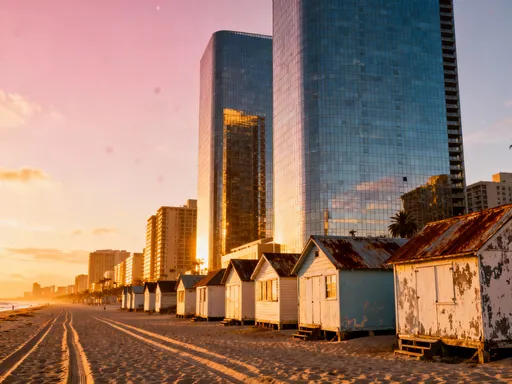
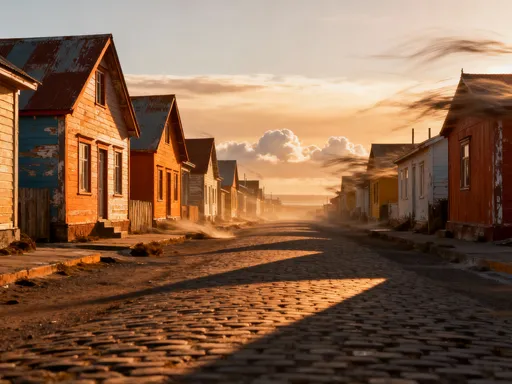
Yet, despite the harsh climate, the city is far from drab. On the contrary, many buildings are painted in bold, cheerful colors—sunflower yellow, ocean blue, raspberry red—that stand in vivid contrast to the frequent gray skies. These hues do more than brighten the mood; they serve as visual anchors in a landscape where fog and wind can disorient even the most seasoned traveler. In neighborhoods like Plaza Muñoz Gamero, the central square, the blend of weathered wood and bright paint creates a tapestry of endurance and optimism. Each structure, no matter how modest, carries a quiet dignity, a testament to a community that has learned to thrive at the edge of the world.
The Legacy of European Immigration in Urban Design
The architectural identity of Punta Arenas is inseparable from its history of immigration. Founded in 1848 as a penal colony, the city began to grow rapidly in the late 19th century, drawing settlers from across Europe—particularly from Croatia, Germany, and Britain. These communities brought with them not only labor and enterprise but also distinct building traditions that would leave a lasting imprint on the city’s streetscapes. Walking through older districts today, one can still trace the outlines of these cultural influences in the gabled roofs, ornate woodwork, and carefully crafted facades that dot the urban fabric.
Croatian immigrants, many of whom arrived to work in the region’s booming sheep industry, constructed homes that reflected their rural heritage. These buildings often feature hand-carved eaves, decorative brackets, and steeply pitched roofs reminiscent of the Dalmatian coast. German settlers, arriving in smaller numbers but with significant influence, introduced half-timbered designs and symmetrical layouts, elements that can still be seen in private residences around the city center. British engineers and merchants, meanwhile, contributed to the development of public buildings and commercial structures, often using imported materials such as corrugated iron and cast-iron columns.
One of the most striking legacies of this multicultural past is the widespread use of imported materials that eventually became integral to local design. Corrugated metal, initially brought in from England and Germany for roofing, was prized for its durability in high-wind conditions. Over time, it transitioned from a purely functional material to a defining aesthetic feature, often painted in bold colors to complement wooden walls. Similarly, Baltic pine and Patagonian lenga wood were used for cladding and interior finishes, their warm tones aging gracefully against the cold southern light. These materials, once considered foreign, are now synonymous with Punta Arenas’ architectural character.
The fusion of European styles with local needs created a unique hybrid architecture—one that balanced tradition with practicality. Builders adapted old-world techniques to the realities of Patagonia: reinforcing foundations, angling roofs to shed wind, and clustering homes for mutual protection. The result is a cityscape that feels both familiar and distinctly its own, where a German-style cottage stands next to a British-influenced warehouse, both clad in Chilean craftsmanship. This blending of influences speaks to a broader truth about Punta Arenas: it is a place built by people from elsewhere, yet deeply rooted in its own identity.
Colorful Wooden Houses: More Than Just Paint
In the Cerro Dorotea neighborhood, one of the oldest residential areas in Punta Arenas, rows of wooden houses climb the gentle hillside like a patchwork quilt flung over the land. Each home is painted in a different pastel shade—mint green, soft lavender, buttery yellow—creating a visual rhythm that softens the ruggedness of the surrounding terrain. At first glance, the colors may seem whimsical, even playful, but they are rooted in both necessity and meaning. In a city where winter days are short and sunlight is scarce, bright facades serve a practical purpose: they reflect what little light is available, helping interiors stay warmer and more inviting.
But the colors go beyond function. They are also a form of emotional resilience. For early settlers living in one of the most isolated cities in the world, far from family and familiar landscapes, a brightly painted door or window frame was a small act of defiance against loneliness and hardship. These hues became symbols of hope, individuality, and belonging. A red door might signal warmth and welcome; a blue shutter could evoke the nearby sea. In a place where the wind howls for days on end, these details offered psychological comfort, a way to assert identity in an unforgiving environment.
The craftsmanship of these homes is equally significant. Built primarily in the late 19th and early 20th centuries, many feature intricate woodwork—scroll-sawn trim, decorative cornices, and hand-turned porch posts—that reflects the pride of their original owners. Though some houses have been restored while others show their age, each one retains a sense of character. Walking through Cerro Dorotea, it’s easy to imagine the lives that unfolded behind these walls: families gathering around wood stoves, children playing on narrow streets, neighbors calling across fences in the crisp morning air.
Today, local preservation efforts are helping to protect these architectural treasures. Community groups and municipal programs have launched initiatives to restore historic facades and encourage sustainable maintenance practices. Homeowners are often provided with guidelines on appropriate paint colors and materials to ensure that renovations respect the neighborhood’s heritage. These efforts reflect a growing awareness that Punta Arenas’ wooden houses are not just relics of the past but living elements of the city’s cultural fabric. They are, in many ways, the soul of the city—modest, colorful, and enduring.
Churches and Chapels: Faith Against the Elements
Amid the wind-battered streets of Punta Arenas, churches stand as quiet sentinels of faith and community. The most prominent of these is the Sacred Heart Cathedral, a striking wooden structure that dominates the skyline near Plaza Muñoz Gamero. Built in the early 20th century, the cathedral combines Gothic Revival elements—pointed arches, tall spires, and stained glass windows—with local materials and construction techniques. Its exterior is clad in dark wood, now weathered to a silvery gray, while the interior remains warm and intimate, with polished pews, carved altars, and soft light filtering through colored glass.
What is remarkable about the cathedral, and indeed most religious buildings in the city, is their ability to convey grandeur without excess. In a region where resources are limited and conditions are severe, these structures were never meant to rival the cathedrals of Europe. Instead, they were designed to serve as spiritual anchors—places of solace, gathering, and continuity. The Sacred Heart Cathedral, though modest in size, has hosted generations of baptisms, weddings, and funerals, becoming a repository of collective memory. Its very existence is a statement of perseverance: a place where faith was built plank by plank, nail by nail, in one of the most remote corners of the world.
Smaller chapels scattered throughout the city tell similar stories. In working-class neighborhoods, wooden chapels with simple crosses and unadorned facades offer quiet spaces for reflection. Many were constructed by immigrant communities—Croatian Catholics, British Anglicans, German Lutherans—who sought to maintain their religious traditions in a new land. These chapels often feature steep roofs to shed snow and wind-resistant construction, yet they retain a sense of warmth and welcome. Inside, candles flicker, hymnals sit on wooden racks, and the scent of pine lingers in the air.
The resilience of these religious buildings mirrors that of the people who built them. Over the decades, they have withstood storms, fires, and economic hardship, often being rebuilt or restored through community effort. In doing so, they have become more than places of worship—they are symbols of continuity in a city shaped by change. To visit one is to feel a deep sense of connection, not only to the divine but to the generations of families who have found strength within these walls.
The Magellan Era: Historical Buildings with a Story
Punta Arenas owes much of its early prosperity to the Magellan Strait, the vital maritime passage that connected the Atlantic and Pacific Oceans before the Panama Canal. During the late 19th and early 20th centuries, the city became a key refueling and supply point for international shipping, attracting merchants, ship captains, and entrepreneurs. This era of economic boom left behind a legacy of grand homes and public buildings that reflect the wealth and ambition of the time. Among the most significant is the Braun Menéndez Mansion, now home to the Regional Museum of Magallanes.
Constructed in 1906 for José Nogueira, a prominent businessman, and later acquired by the influential Menéndez family, the mansion is a masterpiece of Patagonian aristocratic architecture. Built entirely of wood, it features a symmetrical facade, bay windows, a central tower, and an expansive veranda—all hallmarks of European-inspired design adapted to local conditions. Inside, the preserved interiors offer a glimpse into a bygone era of opulence: chandeliers hang from high ceilings, parquet floors gleam under soft light, and period furniture fills elegantly appointed rooms. Oil paintings, antique clocks, and imported china speak to a lifestyle shaped by global trade and cultural exchange.
The museum now uses the mansion to tell the story of the region’s development, from indigenous Selk’nam heritage to the sheep-farming boom and the city’s role in global navigation. Exhibits include historical documents, navigational instruments, and personal artifacts from the families who shaped Punta Arenas’ early identity. Walking through the mansion is like stepping into a carefully preserved moment in time—a reminder that even in the far south, Chile was never truly isolated from the world.
Other buildings from this era, such as the former Governor’s Palace and the old Customs House, further illustrate the city’s historical significance. Though some have been repurposed—now housing government offices or cultural centers—they retain their architectural integrity. Together, these structures form a tangible link to Punta Arenas’ golden age, when fortunes were made from wool exports and international ships docked regularly along its shores. They remind visitors that this remote city once played a pivotal role in global commerce, and that its buildings are not just beautiful but historically resonant.
Modern Meets Traditional: How New Architecture Respects the Past
As Punta Arenas has grown into the 21st century, its architectural evolution has been guided by a strong sense of continuity. Newer buildings—whether residential, commercial, or public—often incorporate traditional design elements to maintain visual harmony with the historic core. Wood cladding remains a preferred material, not only for its aesthetic warmth but for its insulating properties in the cold southern climate. Sloped roofs, small windows, and low profiles continue to be standard, ensuring that modern construction aligns with the practical lessons of the past.
This respect for tradition is evident in recent urban projects. The waterfront promenade, for example, blends contemporary materials like steel and glass with wooden decking and traditional lighting fixtures, creating a space that feels both modern and rooted in local character. Public plazas have been redesigned to highlight historic buildings while adding accessible pathways, benches, and green spaces for community use. Even new housing developments on the city’s outskirts often mimic the scale and style of older neighborhoods, using pitched roofs and colorful facades to echo the charm of Cerro Dorotea or the city center.
Local pride in architectural heritage is palpable. Municipal regulations encourage the preservation of historic structures, and incentives are available for homeowners who restore original features. Architects and planners frequently consult with heritage organizations to ensure that new developments complement rather than compete with the city’s unique identity. This collaborative approach reflects a broader cultural value: that progress does not require erasing the past, but rather building upon it.
The result is a city that feels cohesive, where old and new coexist in quiet dialogue. A visitor might pass a 19th-century wooden cottage next to a modern café with a green roof and solar panels, yet the transition feels natural, not jarring. This balance is not accidental—it is the product of deliberate choices by a community that understands the importance of place, memory, and continuity. In Punta Arenas, modernization is not a rejection of tradition but an extension of it.
Wandering with Purpose: How to Experience the Architecture Like a Local
To truly appreciate the architecture of Punta Arenas, one must move slowly. The city rewards the curious traveler who is willing to wander without urgency, to pause and look closely at the details that define its character. The best way to begin is on foot, starting at Plaza Muñoz Gamero, the city’s central square. From here, the Sacred Heart Cathedral rises to the east, while the old Customs House and the Regional Museum anchor the north and west sides. Benches offer places to sit and observe—the daily rhythm of life, the changing light on wooden facades, the way the wind lifts scraps of paper like leaves.
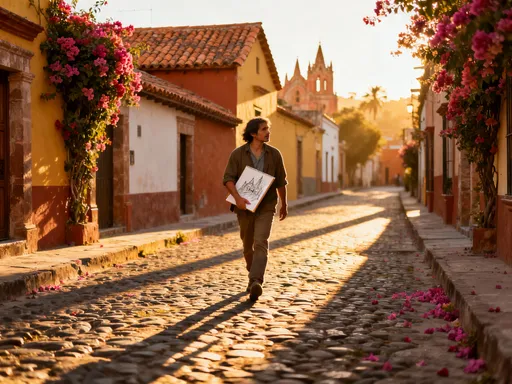
From the plaza, a gentle climb up Cerro Dorotea reveals some of the most picturesque residential streets. Early morning or late afternoon offers the best light, when the sun casts long shadows and the pastel houses glow softly against the hillside. Narrow lanes, often unpaved, wind between homes, each with its own personality—some meticulously maintained, others showing their age with dignity. It’s not uncommon to see neighbors chatting over fences or children playing in small yards, their voices carrying on the breeze.
Combining architecture with local culture enhances the experience. Small cafés tucked into historic buildings serve rich hot chocolate and *tortas*—homemade cakes—that offer a moment of warmth after a brisk walk. The Museo del Recuerdo, housed in a restored wooden home, displays photographs and artifacts from daily life in early Punta Arenas, adding depth to the visual journey. Even a simple stop at a corner shop for *empanadas* can become part of the exploration, as conversations with locals often lead to unexpected insights about the city’s history and spirit.
For those seeking a more structured route, several guided walking tours are available, led by historians and architects who share stories behind the buildings. These tours often include access to private homes or lesser-known sites, offering a deeper understanding of the city’s architectural evolution. Alternatively, a self-guided map from the tourist office can help visitors navigate key landmarks at their own pace. The goal, regardless of method, is the same: to move with intention, to notice the carved gable here, the rust-red roof there, and to feel the presence of a community that has learned to build not just for survival, but for beauty.
Wandering Punta Arenas is not about checking off monuments or capturing perfect photos. It is about immersion—letting the city’s rhythm guide your steps, listening to the creak of wooden balconies, feeling the wind at your back, and understanding that every building, no matter how small, has a story shaped by time, weather, and human care.
Punta Arenas doesn’t shout its beauty—it whispers it through creaking wooden balconies, rust-red roofs, and doors painted like promises. Its architecture isn’t just about style; it’s a testament to endurance in one of the world’s most remote cities. By wandering with curiosity, you don’t just see buildings—you feel the heartbeat of a place that’s learned to stand tall, even when the wind won’t stop pushing.