This Is Why Geneva’s Hidden Terrain Will Steal Your Heart
You know that feeling when a place just gets you? Geneva did that to me. Beyond the polished postcards and fancy watch shops, there’s a side of this Swiss city most tourists miss — wild alpine trails, secret lakeside paths, and villages clinging to impossible slopes. I slowed down, ditched the checklist, and let the terrain guide me. What I found wasn’t just beauty — it was meaning. If you’re craving travel with soul, Geneva’s rugged landscape might be your next love story.
Reimagining Geneva: More Than Just a City of Clocks and Conventions
Geneva is often introduced as a city of precision and protocol — home to international diplomacy, elegant boutiques, and the timeless tick of luxury timepieces. Its reputation for order and sophistication is well earned. Yet, for all its polished charm, the true essence of Geneva lies beyond the urban core, in the untamed embrace of its surrounding landscape. The moment you step outside the city’s refined perimeter, the air changes. It becomes crisper, carrying the scent of pine and lake water. The sounds shift from traffic hum to the rustle of leaves and distant cowbells echoing through mountain folds.
This contrast is not merely aesthetic — it’s transformative. Many visitors spend their days touring the United Nations offices, strolling along the Jet d’Eau, or shopping on Rue du Rhône, and while these experiences have their place, they only reveal one dimension of Geneva. The deeper story unfolds in the folds of the land itself. Just a short walk from the city limits, vineyards climb gentle slopes, their rows tracing the contours of the earth like stitches in a well-worn quilt. Further out, the Jura foothills rise with quiet determination, and beyond them, the snow-dusted Alps stand as silent sentinels.
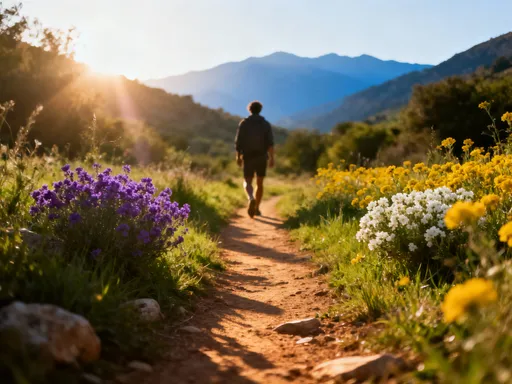
For travelers willing to look beyond the postcard image, Geneva becomes a gateway to geological poetry. The shift from urban to alpine is not abrupt but gradual, a slow unfurling of terrain that invites deeper engagement. One moment you’re in a café sipping espresso beneath wrought-iron balconies; the next, you’re hiking a sunlit path where goats perch on rocky outcrops and the only footprints ahead are your own. This transition marks the beginning of a different kind of journey — one where the rhythm of the land, not the itinerary, becomes the guide.
The Magic of Moving Slow in Mountain Rhythm
There is a quiet wisdom in moving slowly through mountainous terrain, and Geneva’s landscape rewards patience above all. Unlike cities that thrive on speed and efficiency, the alpine environment operates on a different timescale — one shaped by seasons, elevation, and the natural pace of human exertion. When you walk, cycle, or take a local train at a relaxed tempo, you begin to sync with this rhythm. Each uphill breath, each pause to drink in a view, becomes part of the experience rather than a distraction from it.
Slow travel in this region is not just a choice — it’s a necessity for full appreciation. The elevation changes around Geneva are subtle yet profound. A mere 500 meters can shift the climate, the vegetation, and even the quality of light. As you ascend from the lakeshore to higher meadows, the air thins slightly, the wind picks up, and the panorama widens. These transitions create natural intervals, moments built into the journey for reflection. You’re not just passing through the landscape; you’re participating in it.
Walking trails that wind through forested slopes or along terraced hillsides allow travelers to notice details that would blur at higher speeds. The way sunlight filters through larch trees in the late afternoon, the texture of moss on ancient stone walls, the distant chime of a cowbell — these are the sensory imprints that linger long after the trip ends. Cycling along the lake’s edge at dawn, with mist still clinging to the water, offers a meditative experience that no guided tour could replicate. Even taking a regional train, where the tracks curve alongside cliffs and vineyards, becomes an act of immersion when you resist the urge to rush.
This alignment with mountain rhythm fosters emotional clarity. The physical effort of climbing, the stillness of a high-altitude viewpoint, the coolness of a forest path — all contribute to a sense of presence. In a world that often feels fragmented, the consistency of the land offers grounding. Travelers who embrace this pace often find that their expectations shift. They stop measuring success by how many sites they’ve seen and begin to value how deeply they’ve felt a place.
Following the Land: A Journey Through Microclimates and Terrains
One of Geneva’s most remarkable qualities is its geographical diversity within a compact area. Within a radius of just 30 kilometers, travelers can pass through multiple microclimates, each shaped by the interplay of lake, mountain, and altitude. This variety is not merely a curiosity — it defines the character of every journey into the region’s natural spaces. The moderating influence of Lake Geneva creates a milder climate along its northern shore, where palm trees grow in sheltered gardens and citrus fruits ripen in the sun. Just a short drive inland, the land rises sharply, and the air cools, giving way to dense forests and alpine flora.
To the north, the Jura Mountains form a folded ridge of limestone and forest, less dramatic than the Alps but rich in quiet beauty. Trails here wind through beech and fir woods, where mist often lingers in the early morning, softening the edges of the world. The terrain is undulating, with rolling hills and hidden valleys that feel untouched by time. In contrast, the southern horizon is dominated by the towering presence of the Alps, where peaks like Mont Blanc rise above 4,000 meters. These high altitudes bring colder temperatures, stronger winds, and a sense of exposure that sharpens the senses.
Each of these zones offers a distinct travel experience. In the sun-drenched villages of Cologny and Hermance, perched along the lake’s western arm, vineyards bask in long hours of sunlight, producing wines with a character shaped by the terroir. The soil, a mix of limestone and glacial deposits, imparts a minerality that connoisseurs recognize instantly. Further east, near the base of Salève, the climate is cooler and more humid, supporting moss-covered boulders and fern-filled clearings. Here, the forest feels ancient, almost primordial, and the sound of wind through the treetops becomes a constant companion.
At higher elevations, above 1,000 meters, the landscape opens into alpine meadows dotted with wildflowers in summer and blanketed in snow in winter. These high pastures are used seasonally by herders, a tradition that continues to this day. The scent of hay and wild thyme fills the air, and the silence is profound. This diversity means that no two hikes, no two drives, no two days in the Geneva region are ever quite the same. The land itself becomes a narrative, with each turn in the trail revealing a new chapter.
Lakeside Secrets: Where Water Meets Wild
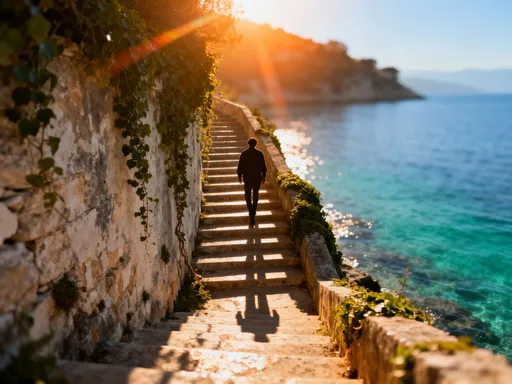
Lake Geneva is often admired from a distance — photographed from promenades, crossed by ferry, or glimpsed between buildings in the city center. But its true magic lies in the quieter stretches, where the shoreline retreats from view and the water meets the wild. Away from the tourist hubs, the lake reveals a more intimate side: secluded coves where locals swim at dawn, reed-lined inlets that shelter kingfishers and herons, and footpaths that follow the water’s edge with gentle curves.
Walking along these lesser-known sections at sunrise is an experience of stillness and reflection. The surface of the lake often lies perfectly calm, mirroring the sky in a way that blurs the boundary between earth and atmosphere. Mist rises in delicate tendrils, and the first light paints the water in soft gold and rose. These are moments of quiet revelation, when the noise of daily life fades and the mind settles into a deeper awareness. The path may be unpaved, uneven in places, but that only adds to the sense of authenticity.
Along the way, you might encounter locals going about their morning routines — a fisherman checking his nets, a couple walking their dog, a lone kayaker gliding silently across the surface. These interactions are brief but meaningful, reminders that this landscape is not just a backdrop for visitors but a living part of daily life. Children play in shallow waters during summer, their laughter echoing across the bay, while elders sit on weathered benches, watching the boats drift by. There is a sense of continuity, of generations shaped by the rhythm of the lake.
The water itself has a calming presence, its vastness both humbling and soothing. Unlike the ocean, Lake Geneva is enclosed, its shores embracing it like arms. This creates a sense of protection, even in its depth. Swimming in its cool waters, especially in the early morning, is a ritual of renewal. The temperature shocks the system at first, then brings a clarity that lingers long after you’ve dried off. For those seeking contemplative travel, these lakeside paths offer a perfect balance of beauty and serenity, a space where the mind can wander as freely as the body.
Ascending Salève: The “Balcony of Geneva” That Changes Everything
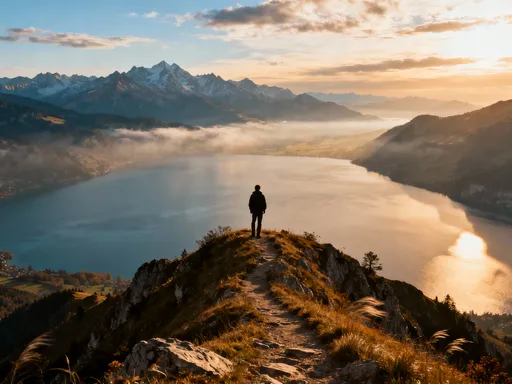
Rising just across the French border but deeply woven into the outdoor culture of Geneva, Mont Salève is often called the “Balcony of Geneva” — and for good reason. From its summit, the entire lake unfolds below like a living map, with the city nestled at its western tip and the Alps forming a majestic backdrop. What makes Salève special is not just the view, but the journey to it. The ascent is rugged, unpolished, and refreshingly free of tourist crowds. It is a mountain that belongs to hikers, climbers, and those who seek a raw encounter with nature.
The trail begins in the village of Annemasse, where the path quickly leaves paved roads behind. The first section climbs through a mixed forest of oak and pine, the ground covered in pine needles and scattered rocks. As you gain elevation, the trees thin out, giving way to open slopes dotted with wild thyme and rockroses. The path is not always well-marked, and that’s part of its charm — it demands attention, a presence in the moment. You navigate by instinct as much as by trail signs, your senses tuned to the texture underfoot and the shift in wind.
Halfway up, you may spot ibex or wild goats perched on narrow ledges, their sure-footedness a marvel to behold. They watch with calm indifference, creatures perfectly adapted to this terrain. The air grows cooler, and the wind stronger, carrying the scent of sun-warmed stone. Then, suddenly, the ridge opens up, and there it is — the panoramic view that makes every step worthwhile. On clear days, you can see Mont Blanc floating in the distance like a ghostly peak, its snowfields glowing in the sunlight.
What strikes most visitors is the contrast between Salève and the city below. Geneva, from this vantage, appears orderly and contained, a world of straight lines and human control. But the mountain is wild, untamed, shaped by forces far older than any institution. Standing on its ridge, you feel a shift in perspective — not just visually, but emotionally. The concerns that seemed urgent an hour ago now feel small, distant. This is the power of terrain: it recalibrates the soul. For Genevans, Salève is more than a hiking destination; it’s a place of return, a natural sanctuary where the mind can reset and the spirit can breathe.
Vineyard Paths and Terraced Slopes: Where Humans Shape the Land
While the Alps and forests represent nature’s grandeur, the vineyards near Geneva tell a different story — one of human perseverance and harmony with the land. The most celebrated example is the Lavaux region, a UNESCO World Heritage site stretching along the northeastern shore of Lake Geneva. Here, for over 800 years, generations of farmers have carved terraces into impossibly steep slopes, transforming what was once rugged terrain into a functional and breathtaking landscape.
Walking through these vineyards is to witness the dialogue between human effort and natural constraint. The terraces are held in place by dry-stone walls, built without mortar, each stone carefully placed to resist erosion and retain soil. The gradient is so steep that mechanization is nearly impossible — everything from pruning to harvest is done by hand. This labor-intensive tradition speaks to a deep respect for the land, a recognition that beauty and productivity can coexist when approached with patience and care.
The path through Lavaux winds through rows of Chasselas and Pinot Noir vines, the leaves dappled with sunlight. In late summer, the grapes hang heavy, their sweetness concentrated by the sun reflected off the lake. Along the way, you may meet a local grower taking a break under a fig tree, wiping sweat from his brow. These encounters are unscripted, genuine — a farmer sharing a glass of wine from last year’s harvest, explaining how the south-facing slopes capture the maximum sunlight, or how the lake’s microclimate prevents frost damage in spring.
Tasting the wine here is not just a sensory pleasure; it’s an act of connection. Each sip carries the essence of the soil, the sun, the rain, and the hands that tended the vines. It is a reminder that landscapes are not static — they are shaped by time, by culture, by daily acts of stewardship. For the traveler, walking these terraced slopes becomes a meditation on sustainability, on the balance between human needs and environmental limits. It is a lesson in humility and care, written in stone and vine.
Why Terrain Shapes Memory: The Lasting Impact of Place
In the end, it is not the monuments or museums that stay with us most vividly, but the feel of a place underfoot, the quality of light on a mountainside, the sound of water lapping at a quiet shore. Geneva’s terrain — with its lakes, slopes, vineyards, and peaks — imprints itself on memory in ways that curated experiences cannot. This is because the body remembers as much as the mind. The ache in your legs after climbing Salève, the coolness of lake water on your skin, the scent of wild thyme on a sunlit path — these sensory details become anchors for emotion.
There is a growing understanding in psychology and neuroscience that physical environments shape our emotional states and cognitive patterns. Natural landscapes, in particular, have been shown to reduce stress, enhance creativity, and foster a sense of well-being. But beyond the science, there is a deeper truth: we are drawn to places that mirror our inner landscapes. The ruggedness of the alpine terrain, the stillness of the lake, the order of the terraced vineyards — each reflects a different facet of the human experience. When we move slowly through such environments, we are not just observing nature; we are engaging in a quiet dialogue with ourselves.
Geneva, in this sense, offers more than a vacation — it offers transformation. By allowing the terrain to guide the journey, travelers step out of the role of observer and into that of participant. They are no longer ticking off sights but feeling the pulse of a place. This shift is subtle but profound. It changes the way we remember, the way we return home, the way we carry a place within us.
So if you are seeking travel with soul, consider letting go of the checklist. Step beyond the polished postcards and let the land lead you. Follow the path that curves into the mist, climb the hill with no name, sit by the water and wait for the light to change. In Geneva’s hidden terrain, you may not find what you expected — but you will find something more lasting: a connection that lingers, a memory etched not in photos, but in feeling. Let the landscape shape your journey. Let it, perhaps, change your heart.